
Line 02 · Underground
Bore it. Don't tear it up.
Drilling under roads, drives, creeks and mature yards.
Photograph both ends of the bore. We can scope it faster.
Applications, machines and shots
Each application, the machine classes it calls for, and the frame that documents it.
Machine classes this work calls for. Capability, not an ownership claim.
Road, driveway and lot crossings
- Machine classes
- Ditch Witch JT-class and Vermeer D40x55-class drills
- Photograph this
- Both ends of the bore — the entry and exit pits, or where they would be dug.
Creek, ditch and drainage crossings
- Machine classes
- Walkover locating and tracking, vacuum excavation for potholing
- Photograph this
- What the bore crosses: road, driveway, creek, slab or tree line.
Conduit, fiber and electrical runs
- Machine classes
- Drills with conduit reamers and pull-back swivels
- Photograph this
- Any utility flags or paint marks, and the 811 ticket number.
Water, sewer and septic laterals
- Machine classes
- Mini excavators for pits and tie-ins, drills for the lateral
- Photograph this
- Water, gas, fiber and power meters or pedestals near the path.
Bores under mature trees and hardscape
- Machine classes
- Small-footprint drills with minimal surface disturbance
- Photograph this
- Pits and access: how a machine and trailer get in, where spoil sits.
How a job moves
Illustrative scene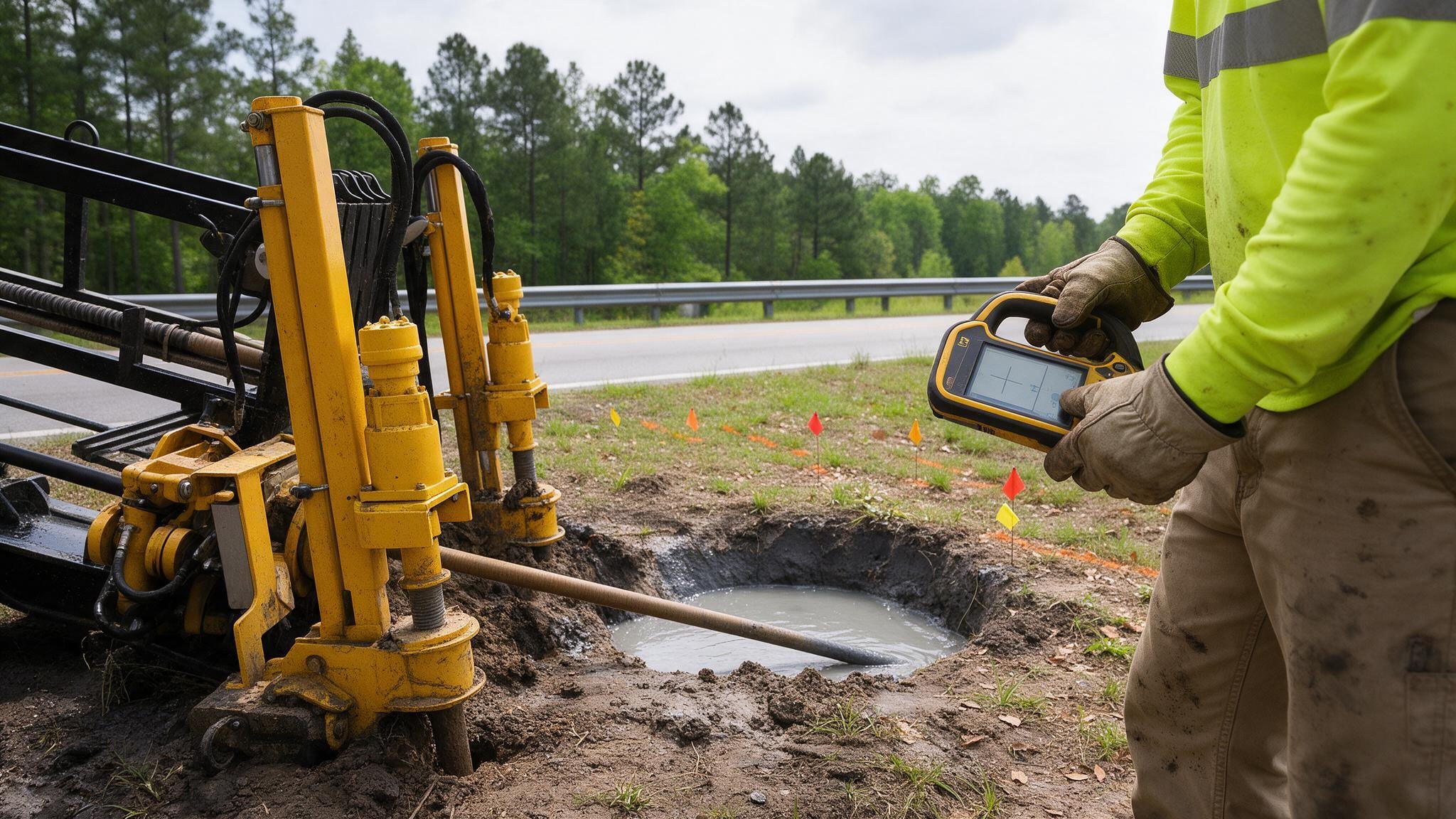 01
01You send photos
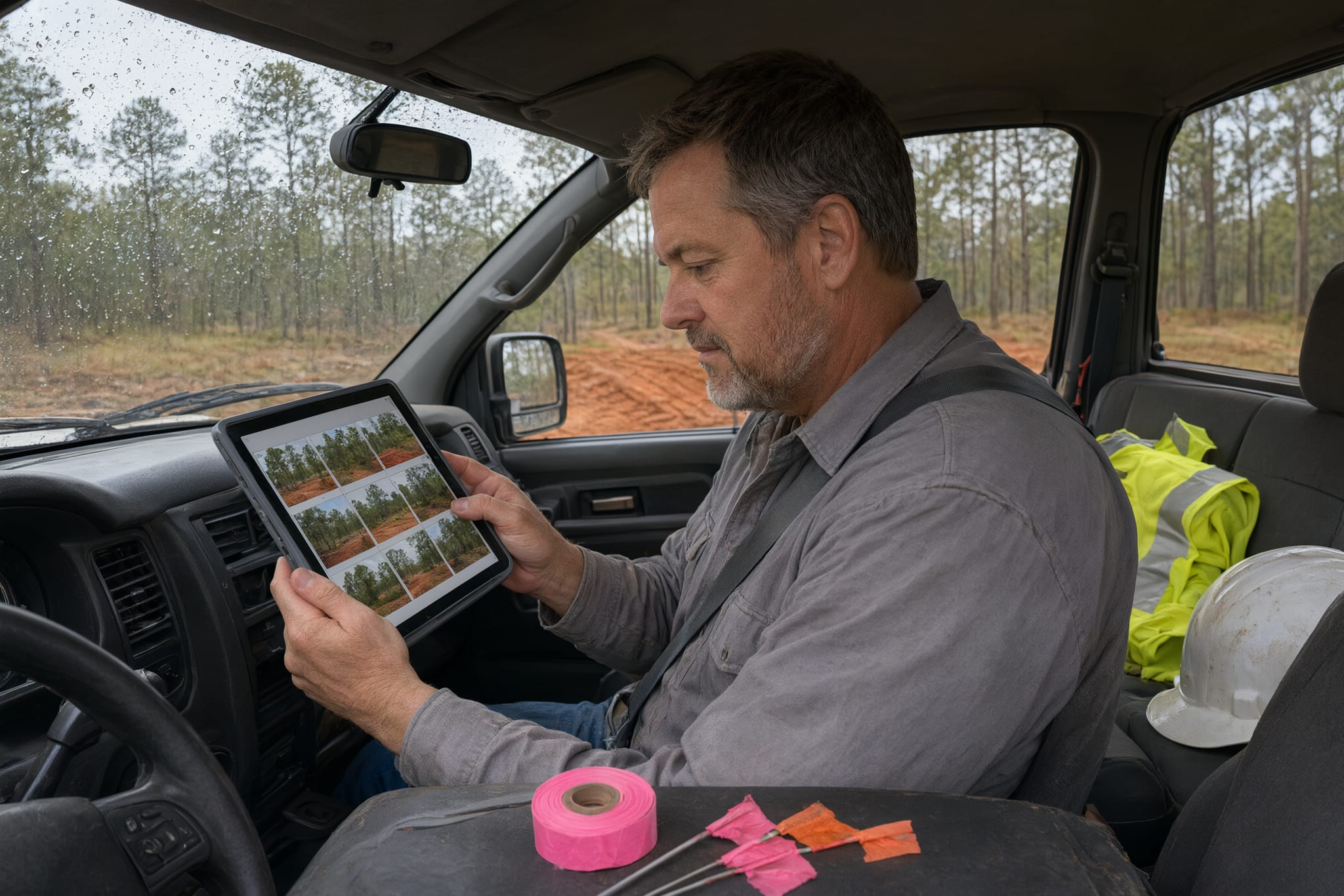 02
02We read the job
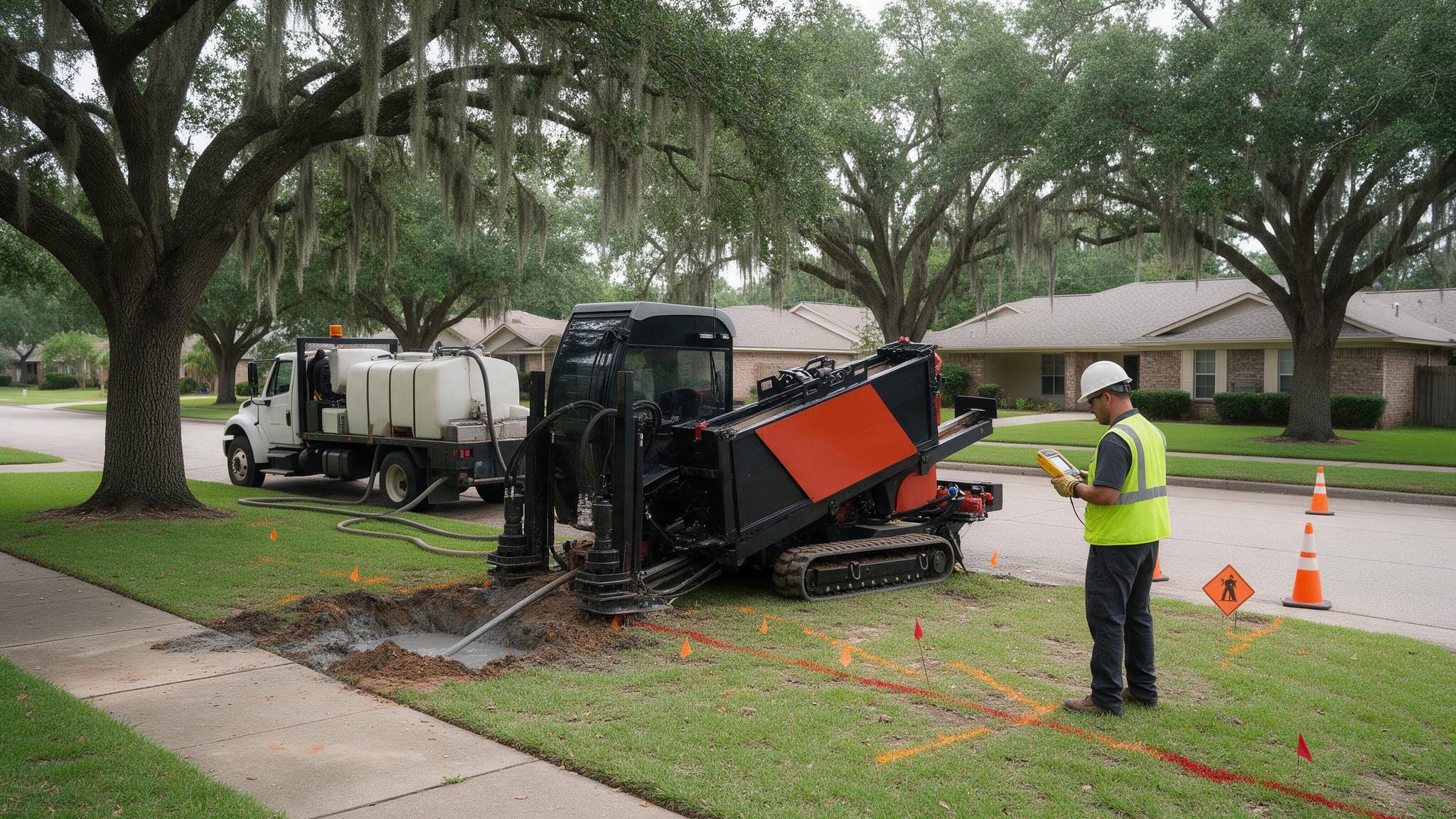 03
03The right machine
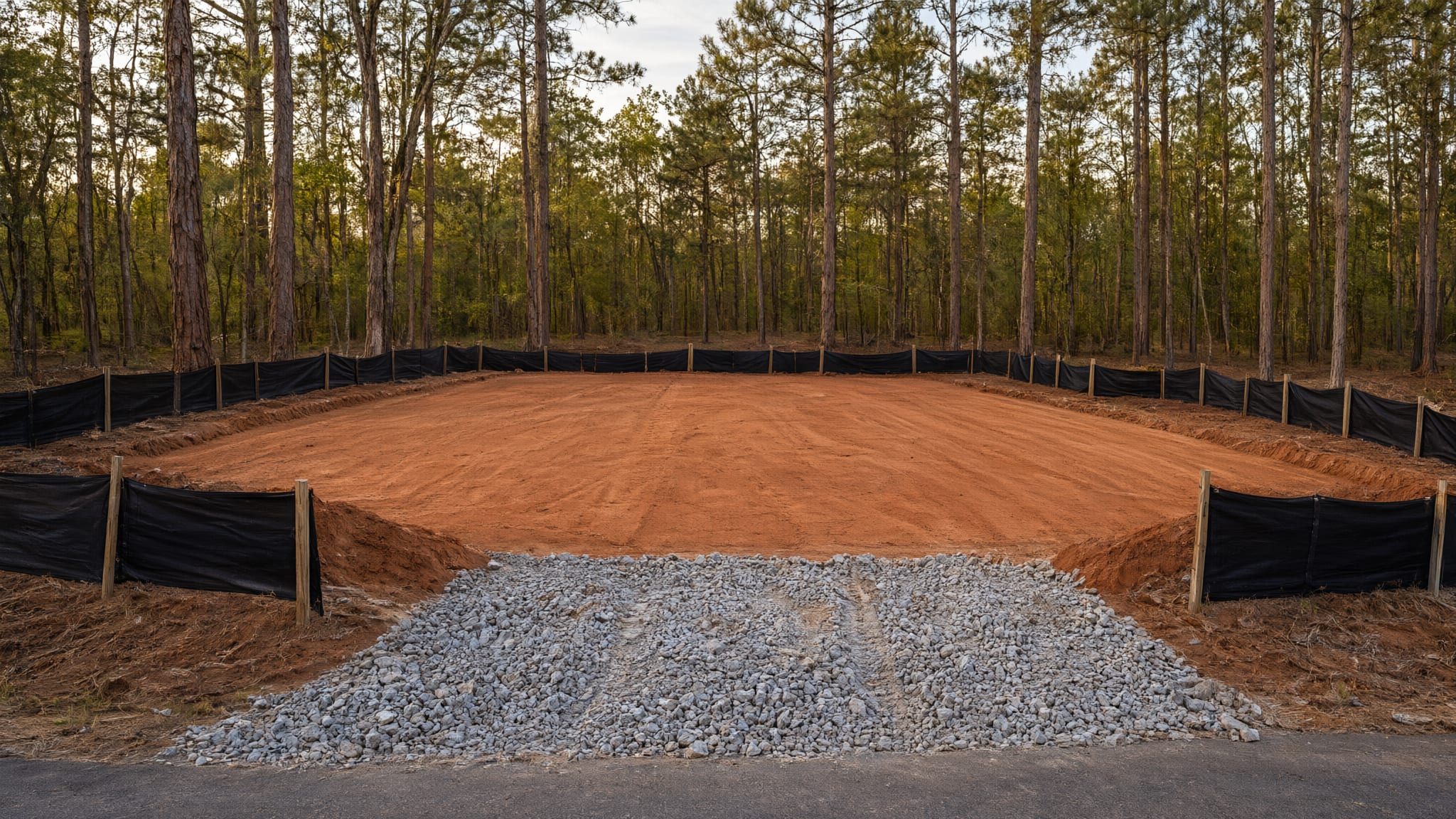 04
04Finished ground


What moves the price
A 60-foot bore and a 300-foot bore are not the same job. Nothing here is a price.
Access
Tight yards, fences and slopes change how the rig gets in.
Terrain
Rock, cobble, muck and groundwater change speed and fluid use.
Disposal
Spoil, slurry and pavement that has to be saw-cut and hauled.
Utilities
A route near gas, water or fiber needs potholing first.
Hidden conditions
Unmarked lines, old foundations, field tile and rock ledges.
Scope changes
Added length, a second bore, or a deeper crossing.
Underground questions
Do you call 811 for locates?
We ask what you already have, and the route is marked before we dig. Locate tickets are dated, so a job that waits may need a fresh one.
Can you cross under a creek?
Often. It depends on the crossing width, the soil and the permits the property already carries.
Will the bore show on the surface?
A directional bore leaves the surface mostly intact: an entry pit, an exit pit and fluid management.
How deep do you usually go?
Depth is set by what is being crossed and by the lines already in the ground, not by a standard number.
Is a photo estimate an inspection?
No. It is a remote estimate. Locates and soil on site can change the scope and the price.
Send both ends of the bore.
Entry, exit and what you are crossing. That is the number we need most.