
Hurricane (Category 1) Isaias · Gulf Coast
Hurricane Isaias is moving toward the northern Gulf Coast.
Hurricane (Category 1) · moving ENE at 9 mph
nearest approach Sat, Oct 10 ~30 mi from Loxley, AL
6 active NWS alert types- Max sustained windNHC · Advisory 7
- 80mph
- PressureNHC · Advisory 7
- 979mb
- Forecast peakHurricane (Cat 2)
- 110mph
Before anything else
Call 911 first whenever a person or a line is involved.
- Downed or damaged power line: keep everyone back, call 911 and call the utility. Never touch a line or anything touching it.
- Trapped or injured person, or the smell of gas: call 911.
- Do not walk the damage at night, in moving water or under a leaning tree to take photos.
- If you cannot get to it safely, send us what you can see from the road.
Market status
- Response area
- Mobile Bay, Baldwin and Mobile counties, and the western Florida Panhandle
- Operational note
- Monitoring and staging storm-response requests. Deployment timing and final scope depend on conditions, safe access and verified site hazards.
- Updated
- October 7, 2026
Applications, machines and shots
Each application, the machine classes it calls for, and the frame that documents it.
Machine classes this work calls for. Capability, not an ownership claim.
Trees and limbs off roofs and structures
- Machine classes
- Grapple compact track loaders and 20–35 ton excavators with grapples
- Photograph this
- The whole tree, including the root plate, from a safe distance.
Drives, lanes and gates reopened
- Machine classes
- Wheel loaders, skid steers and tandem dump trucks
- Photograph this
- What is blocked: the lane, the gate or the road the tree is stopping.
Hazard trees, leaners and hung-up tops
- Machine classes
- Boom truck crane with sawyers and climbers
- Photograph this
- What it is resting on: roof, wall, vehicle, fence, driveway, line.
Debris sorting, loading and haul-off
- Machine classes
- Roll-off containers and log trailers
- Photograph this
- Where the wood can sit, and whether a truck and trailer can turn around.
Site stabilization after the wood is off
- Machine classes
- Excavators, dozers and dump trucks for grade and fill
- Photograph this
- Damage photos before any cleanup starts.
How a job moves
Illustrative scene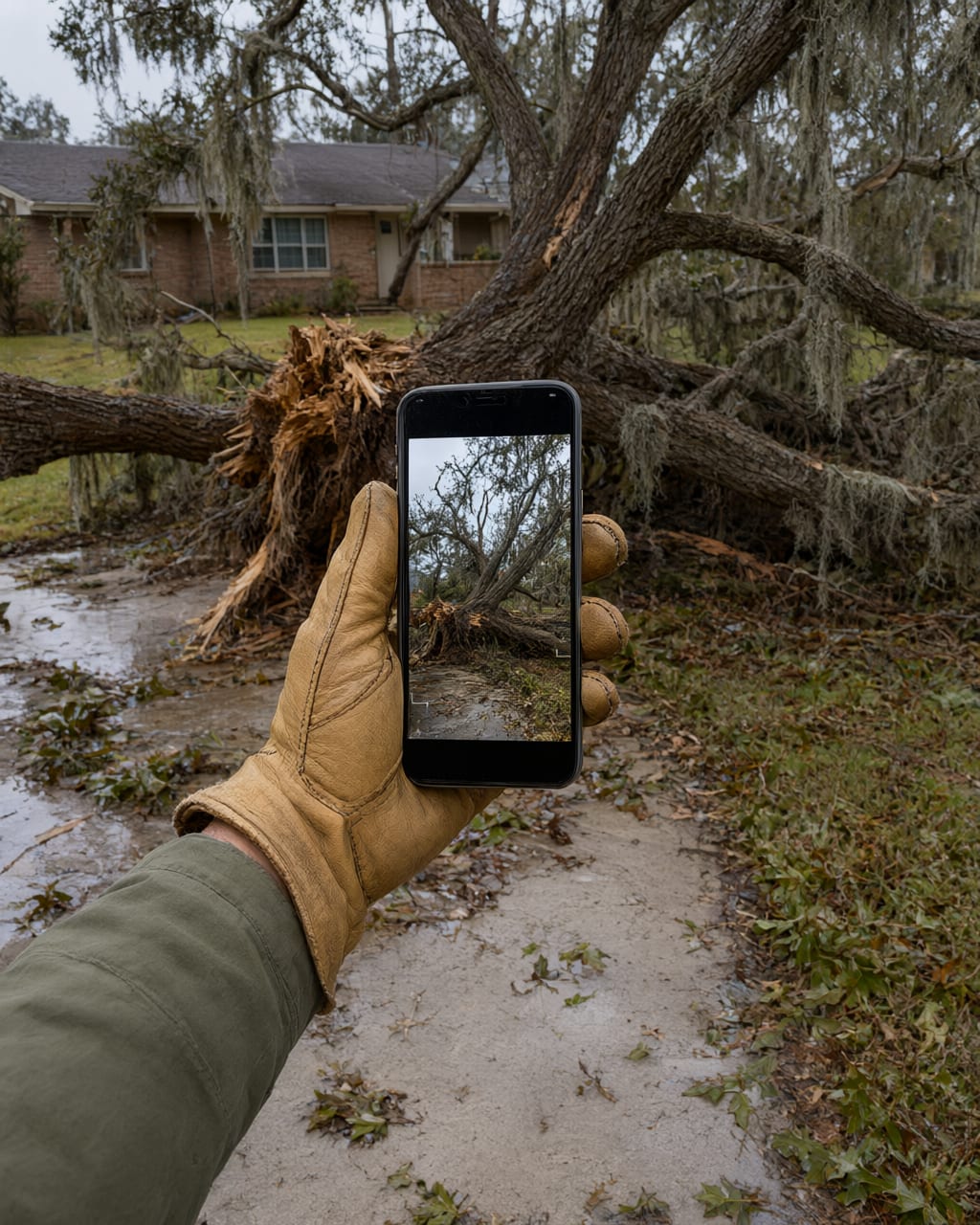 01
01You send photos
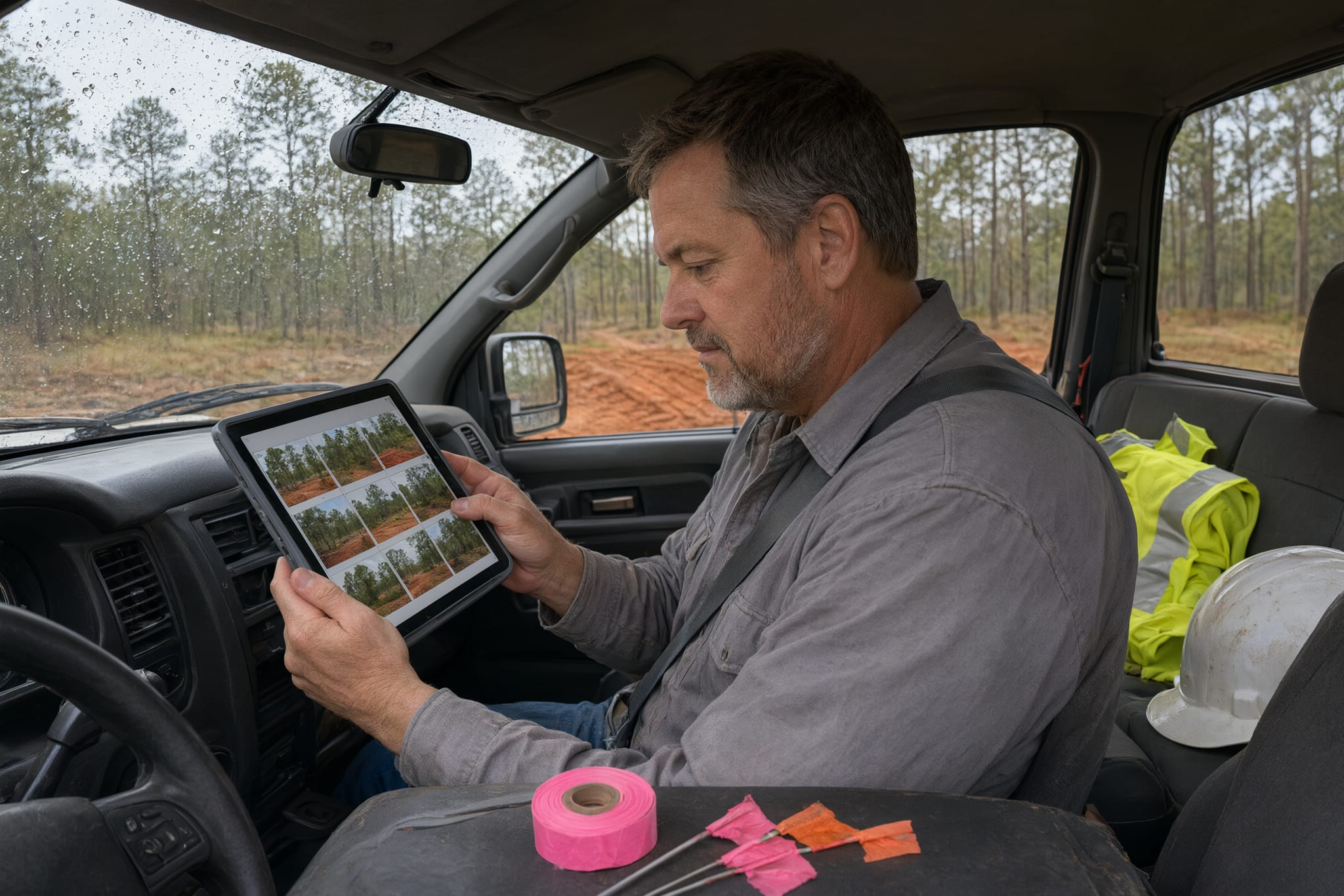 02
02We read the job
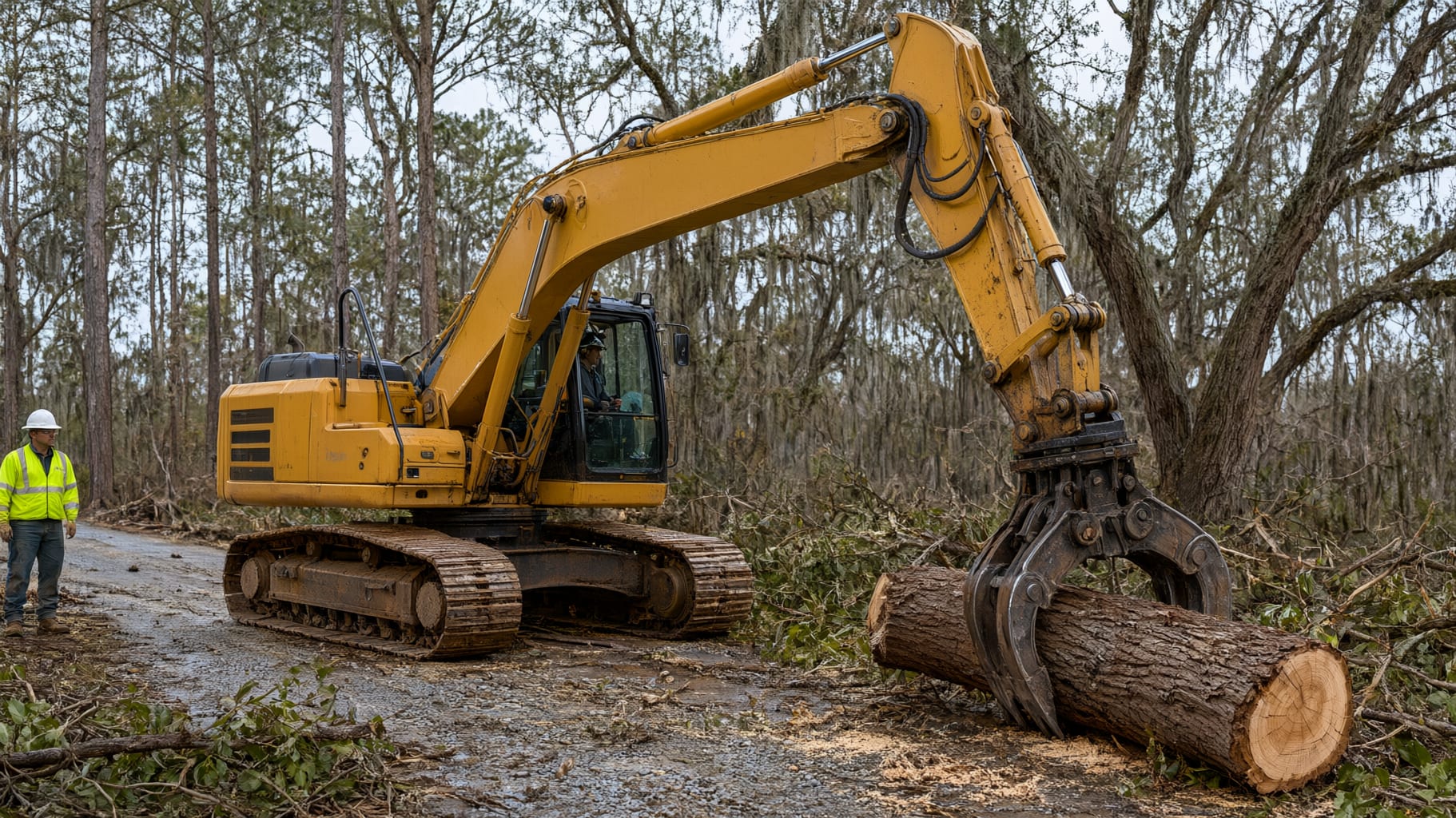 03
03The right machine
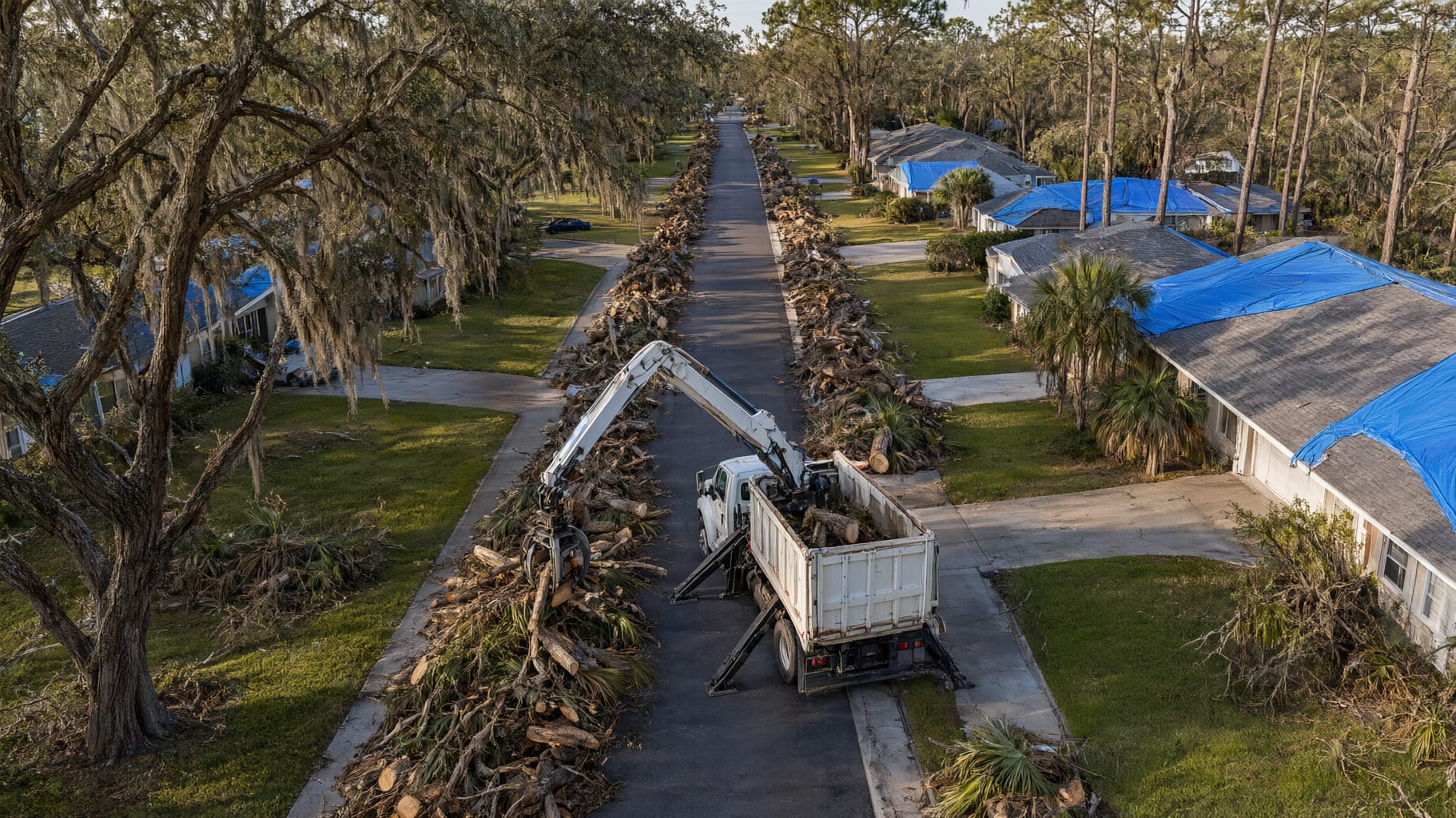 04
04Finished ground


What moves the price
Storm damage is rarely one tree and one direction. Nothing here is a price.
Access
A drive a bucket truck can reach is a different job.
Terrain
Wet ground, slope and soft shoulders change what machines can stand on.
Disposal
Cut and leave, chipping, burning or hauling off — and how far.
Utilities
Lines near the tree mean the utility goes first, then we do.
Hidden conditions
Split trunks, cracked root plates and tension in the wood.
Scope changes
Added trees, damage found under the wood, or landlord and tenant.
How storm requests are prioritized
Hazard and blocked access first, then everything else.
- 01First: lines down, trees on structures, and drives or roads that cannot be passed.
- 02Next: hazards that can still fall — leaners, hung-up tops and split trunks over a walkway or roof.
- 03Then: debris, haul-off and cleanup.
- 04Photos and a clear address help the estimator read the job instead of guessing at it.
Photograph before cleanup
Documentation tips. Your claim stays between you, your policy and your adjuster.
- 01Photograph the whole tree and the root plate, plus what it is resting on.
- 02Photograph the damage before cleanup starts: roof, siding, fencing, vehicles, outbuildings.
- 03Take wide shots from the road and close shots where the wood meets the structure.
- 04Keep every invoice and receipt for work done and material hauled.
- 05Send us the same photos, and keep a copy for your own records.
Storm questions
How fast can you get here?
We do not quote response times. Storm requests are worked in priority order: hazard and blocked access first.
Are crews already out in my area?
We do not publish deployment claims. Send photos and we will tell you what we can take on and when we can look.
Do you work with my insurance company?
We document the work and give you invoices. Your policy, your claim and your adjuster stay yours.
Will you grind the stumps too?
Ground-level clean is typical after a storm. Grinding and stump haul-off are separate scope.
Do you take storm work outside the radius?
Ask. Requests outside the operating radius are still welcome, and we will tell you if we can reach it.
Send storm photos.
The whole tree, what it is resting on, and how the access looks.